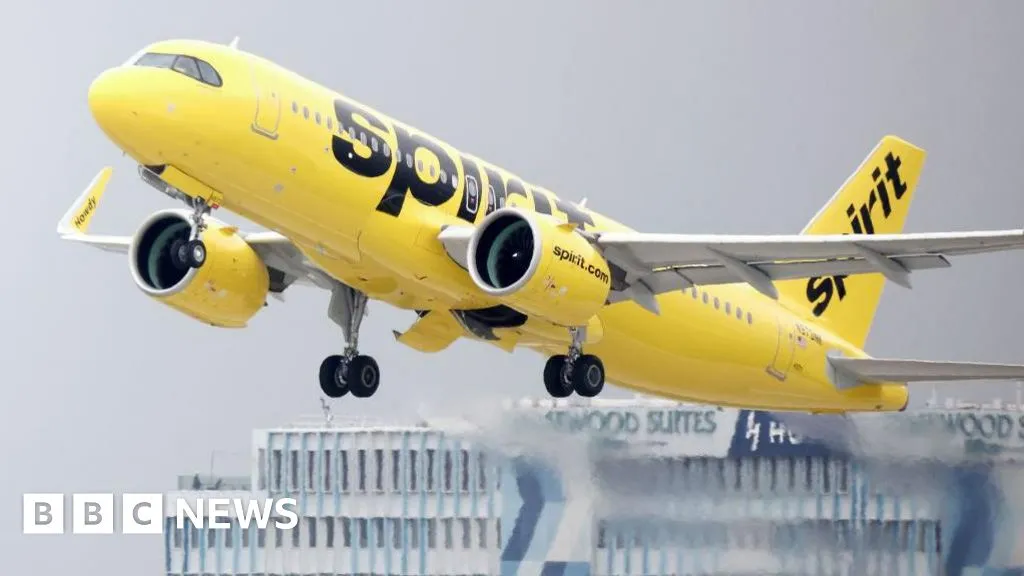

Spirit Airlines has abruptly ceased operations as of May 2, 2026, due to financial difficulties exacerbated by soaring jet fuel prices and a failed government bailout. This sudden shutdown has left passengers stranded and seeking refunds.
The airline’s collapse is attributed to a doubling in jet fuel prices during the Iran war, which significantly impacted its financial outlook. At one point, Spirit accounted for 5 percent of US flights, with 4,119 domestic flights scheduled between May 1 and May 15, offering a staggering 809,638 seats.
The Trump administration had proposed a $500 million bailout to save Spirit Airlines, but ultimately, that effort failed. Transportation Secretary Sean Duffy cautioned passengers against heading to the airport, stating, “If you have a flight scheduled with Spirit Airlines, don’t show up at the airport; there will be no one here to assist you.” This stark warning highlights the chaos surrounding the airline’s abrupt closure.
Founded in 1983 as Charter One Airlines in Detroit, Spirit had been operating for over three decades before this catastrophic turn of events. The airline’s last flight landed at Dallas Fort Worth International Airport from Detroit Metropolitan Airport—an unceremonious end for what was once a popular budget travel option.
In response to the crisis, many passengers are left wondering about their refunds and what recourse they have against an airline that can no longer fulfill its obligations. Dave Davis, a representative for Spirit, stated, “We didn’t intentionally sell any tickets thinking we weren’t going to be here.” Yet the reality is that many travelers are now grappling with disrupted plans and lost money.
The fallout from this situation raises broader questions about the stability of the airline industry as a whole. Can low-cost carriers survive in such volatile economic conditions? And what does this mean for consumers who rely on affordable air travel?
As this story continues to unfold, officials have not provided a clear timeline for how passenger refunds will be handled or what regulatory measures might follow this collapse. The implications for air travel may be significant as other airlines assess their own vulnerabilities amid rising operational costs.

As Latest News UK's Sports Reporter, Hannah Whitfield reports on tennis, cricket and athletics for readers across the country. She built her name covering the county circuit and Team GB at two Commonwealth Games. She holds a degree in Sport and Media from Loughborough University and completed an NCTJ diploma. Hannah lives in Bristol, where she plays club tennis and coaches a junior side. “Sport is at its best when you let the athletes tell the story.”