

The upcoming World Cup final between Spain and Argentina at MetLife Stadium in New Jersey faces potential disruption due to poor air quality in the New York metropolitan area. Wildfires in Canada have caused smoke to spread across multiple major cities in the United States, leading to concerns about playing conditions and player performance.
As of Friday, New York City was among the most affected regions in the U.S., with Detroit, Washington D.C., and Chicago also experiencing particularly poor air quality. The air quality index (A.Q.I.) reading in New York City on Friday reached 188, a level considered “unhealthy” for most individuals. Skies in the city have appeared orange, and the smell of smoke has been noticeable.
The MetLife Stadium, located in East Rutherford, a few miles from Manhattan, recorded an A.Q.I. of 158 on Friday morning. This also falls into the “unhealthy” category, though an improvement was projected throughout the day. Officials in various cities and states have advised residents to remain indoors.
Impact on Sporting Events and Player Health
The poor air quality has already affected other sporting events. A Major League Soccer game between Chicago Fire and Vancouver Whitecaps was postponed, and an MLB game between the New York Mets and Philadelphia Phillies was moved up an hour due to similar concerns. A NWSL game in New York between Gotham FC and Washington Spirit was played amidst worsening atmospheric conditions, with one player noting the “rough” air quality and hydration breaks occurring every 15 minutes.
Professor James Hull, a consultant respiratory physician, indicated that an A.Q.I. reading above 100 poses an increased risk, suggesting that football teams should modify air exposure during training, limiting sessions to no more than 90 minutes. He further stated that an A.Q.I. above 150 raises significant concerns, prompting recommendations to modify training and consider conditions dangerous.
Poor air quality can lead to performance impairment in athletes. Particulates in the air can cause irritation to the throat and airways, leading to sensations of suffocation, coughing, and chest tightness. These effects can distract players and cause them to reduce their performance. The inhalation of particulates can also impact cardiovascular health. Athletes with pre-existing conditions like asthma are particularly susceptible, with an estimated 15 to 20 percent of a typical football team having asthma.
Despite these concerns, Spain trained outdoors in East Hanover, New Jersey, after defeating France to reach the final. Midfielder Mikel Merino acknowledged seeing and smelling the smoke but expressed his focus on the game, stating that external factors should be shut out for such an important match. He also mentioned that the team is being careful with details thanks to the federation and organizers.
Weather Forecast and Future Outlook
The Canadian Interagency Forest Fire Centre (CIFFC) reported 897 active fires in Canada on Friday, with 31 being new and the majority labelled as out of control. A heat dome, an area of high pressure, has pushed temperatures close to 100 degrees Fahrenheit in Ontario and the U.S. Northeast, trapping smoke close to the ground. New York City experienced highs of 92F (33C) on Thursday, with a similar temperature forecast for Friday.
An expected change in weather over the weekend, including rain, is projected to improve air quality for the final. Rain is forecast for Saturday, with showers and thundershowers likely, and cooler temperatures. While rain should help clear the smoke, its effectiveness is difficult to predict. Showers are expected to linger into early Sunday morning, with skies clearing in the afternoon. The temperature for the 3pm ET kick-off is forecast to be near 85F (29C).
FIFA‘s current communication to stakeholders suggests a better outlook for Sunday, with no expectation of an impact on the game at this point. This follows informal discussions between FIFA and World Cup task force CEO Andrew Giuliani. However, the uncertainty persists regarding how much the smoke will ultimately affect the final, especially if fire intensity increases again.
Argentina trained at Atlanta United‘s training ground in Marietta, Georgia, on Thursday morning before traveling to New York that afternoon. Spain arrived at Newark Airport on Wednesday evening and trained at the New York Red Bulls‘ Melanie Lane training grounds in Whippany on Thursday.
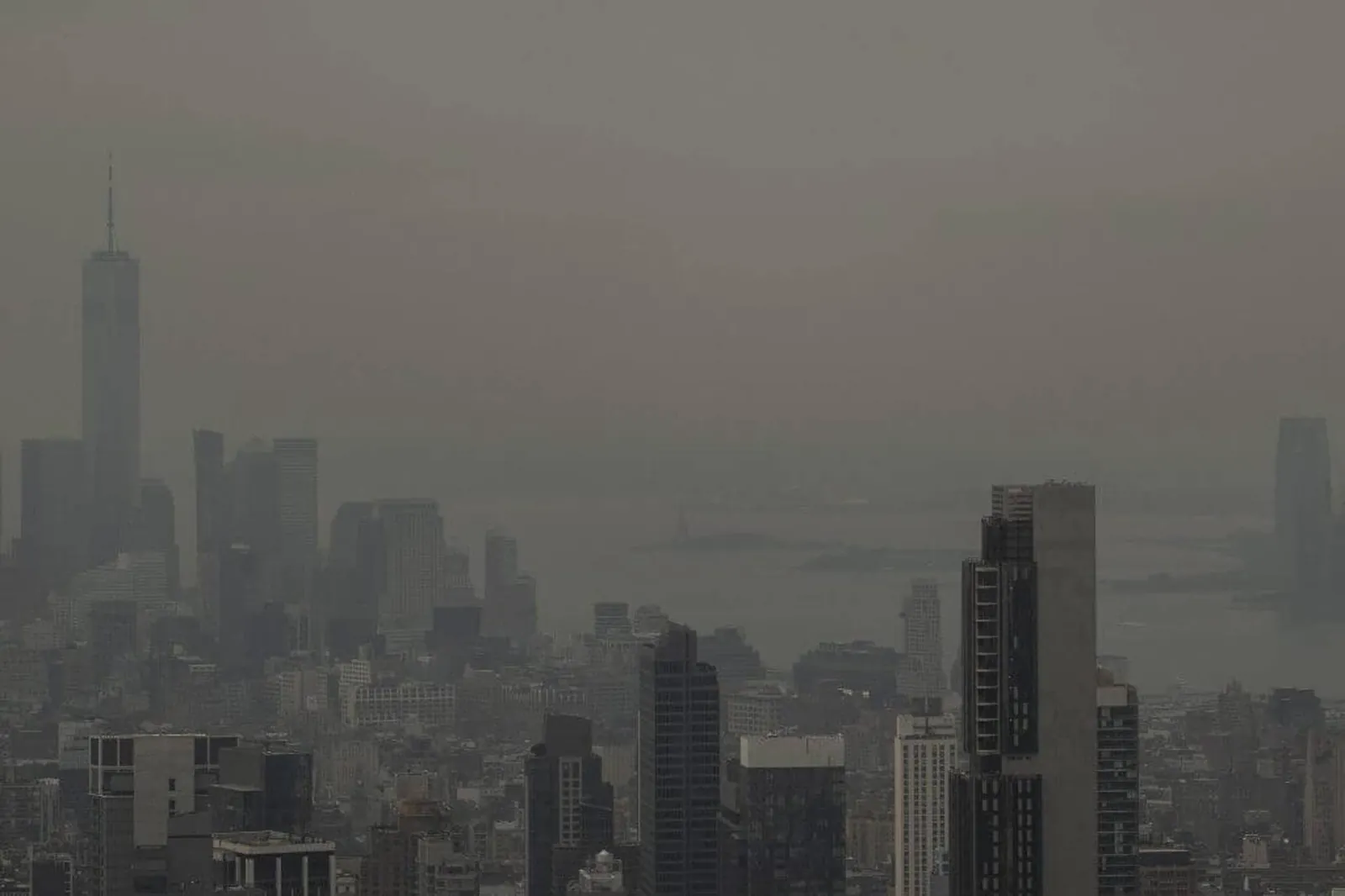
The World Health Organization forecast calls for an improvement to “moderate” air quality in East Rutherford for the final. However, a senior scientist at the Copernicus Atmosphere Monitoring Service noted that another smoky air mass could follow the rain system, making the situation for Sunday unclear.
Roughly 80,000 fans are expected to attend the final at the open-air stadium. White House officials were reportedly expected to speak with FIFA President Gianni Infantino to discuss potential health dangers posed by the smoke.
On July 16, air quality in western regions of New York was considered “very unhealthy,” while the New York City metro area was deemed “unhealthy.”
Read Also
Source: nytimes.com

Daniel Fairbrother is the Senior Football Correspondent at Latest News UK, covering the Premier League, the EFL and the England national side with over a decade of reporting experience. He spent eight years on the football desk of a Yorkshire daily before moving into national coverage. He holds a degree in Sports Journalism from the University of Sunderland and completed an NCTJ diploma. Based in Leeds, he watches non-league football and runs a five-a-side league. “The best football stories are won in the week, not on the whistle.”