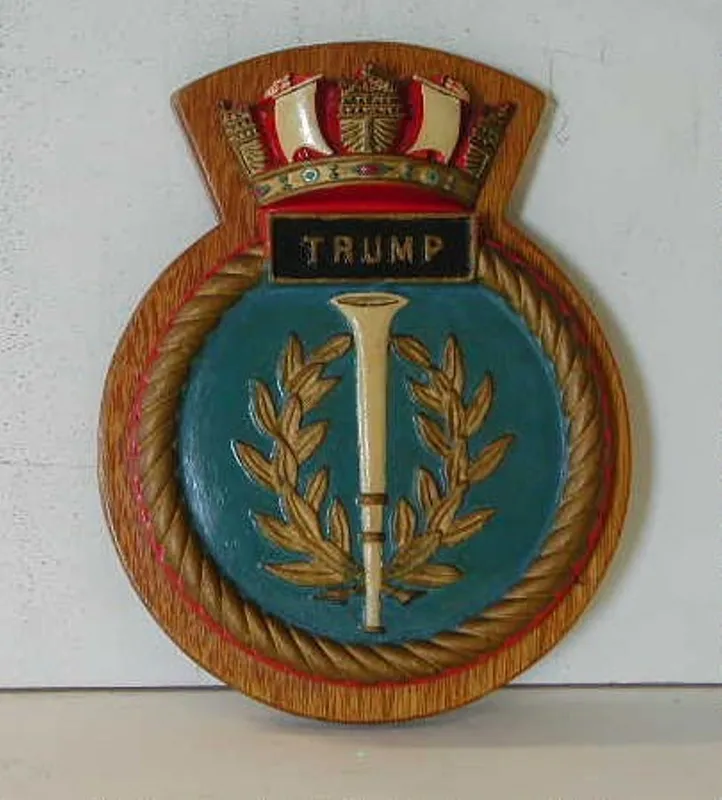

On April 29, 2026, during a lavish state dinner at the White House, King Charles III presented a bell from the decommissioned HMS Trump to former President Donald Trump. This moment was not just ceremonial; it symbolized deep-rooted connections between the United Kingdom and the United States amidst a backdrop of international tensions.
The HMS Trump, a WWII submarine built by Vickers-Armstrong in Barrow, served valiantly during the Battle of the Pacific. Laid down at the end of 1942 and launched in early 1944, it completed over 25 years of service before being scrapped in 1971. The bell being gifted was engraved with ‘Trump’—an ironic twist considering its namesake has no direct historical connection.
Before presenting this unique artifact, King Charles III made history himself by addressing a joint session of US Congress. His words resonated deeply as he remarked, “I’m delighted to present to you the original bell which hung on the conning tower of your valiant namesake. May it stand as a testimony to our nation’s shared history and shining future.” This statement encapsulates not just nostalgia but also hope for future cooperation.
The occasion marked 250 years since the Declaration of Independence, adding weight to an already significant event. Such gestures often carry layers of meaning—diplomatic signals wrapped in historical homage. Yet one can’t help but wonder how this will play out in practical terms as both nations navigate current global challenges.
Trump’s plans for a ‘Trump Class’ battleship expected to be operational by 2028 add another layer to this narrative. With an estimated cost of $17 billion per vessel—100 times more powerful than previous ships—it raises questions about military priorities and spending in an era marked by shifting alliances.
The symbolism of gifting a WWII submarine bell is rich with implications. It evokes memories of shared sacrifices during conflicts while also suggesting that both nations may need to reconsider their roles on the world stage. As we reflect on these historical ties, one must ask: Are such gestures enough to mend or strengthen alliances that seem increasingly fragile?
In essence, King Charles III’s gift serves as both a reminder and a challenge—a call for unity amidst uncertainty. The next steps in US-UK relations could very well depend on how both leaders interpret this moment.

Daniel Fairbrother is the Senior Football Correspondent at Latest News UK, covering the Premier League, the EFL and the England national side with over a decade of reporting experience. He spent eight years on the football desk of a Yorkshire daily before moving into national coverage. He holds a degree in Sports Journalism from the University of Sunderland and completed an NCTJ diploma. Based in Leeds, he watches non-league football and runs a five-a-side league. “The best football stories are won in the week, not on the whistle.”