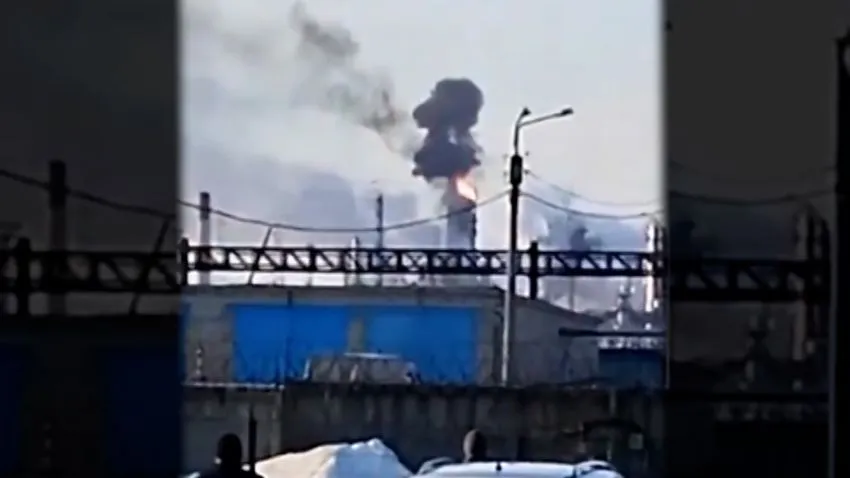

The Tuapse oil refinery has faced repeated drone strikes, significantly impacting Russia’s oil production and prompting emergency evacuations. This marks the third attack in less than two weeks, highlighting a troubling trend in the ongoing conflict.
The latest strike ignited a massive fire, which sent dense black smoke billowing into the sky. Residents nearby had to evacuate as firefighting efforts commenced. Officials have reported at least three fatalities linked to these assaults on the facility.
The refinery is crucial to the Russian oil industry, boasting an annual production capacity of about 12 million tonnes and producing approximately 240,000 barrels of oil products daily. Its strategic importance can’t be overstated—disrupting its operation directly affects revenue streams for the Russian government.
This campaign against Russian energy infrastructure is rooted in Ukraine’s strategic objectives. The Ukrainian military aims to cripple funding sources for the war by targeting facilities like Tuapse.
Environmental consequences also loom large. An oil spill occurred at sea as a result of one of the previous strikes, raising concerns about long-term ecological damage. The situation is complex and evolving.
Vladimir Putin has condemned these attacks, stating that they represent a growing threat to civilian infrastructure. He noted that drone attacks against such facilities are becoming alarmingly frequent.
Aleksandr Kurenkov, a Russian official, described the situation as complicated but controllable—yet it’s hard to ignore the mounting pressure on emergency services tasked with managing these crises.
The future of the Tuapse refinery remains uncertain. With production already halted since April 16 due to earlier damage, continued assaults could lead to prolonged disruptions in supply and further economic fallout for Russia.

Daniel Fairbrother is the Senior Football Correspondent at Latest News UK, covering the Premier League, the EFL and the England national side with over a decade of reporting experience. He spent eight years on the football desk of a Yorkshire daily before moving into national coverage. He holds a degree in Sports Journalism from the University of Sunderland and completed an NCTJ diploma. Based in Leeds, he watches non-league football and runs a five-a-side league. “The best football stories are won in the week, not on the whistle.”