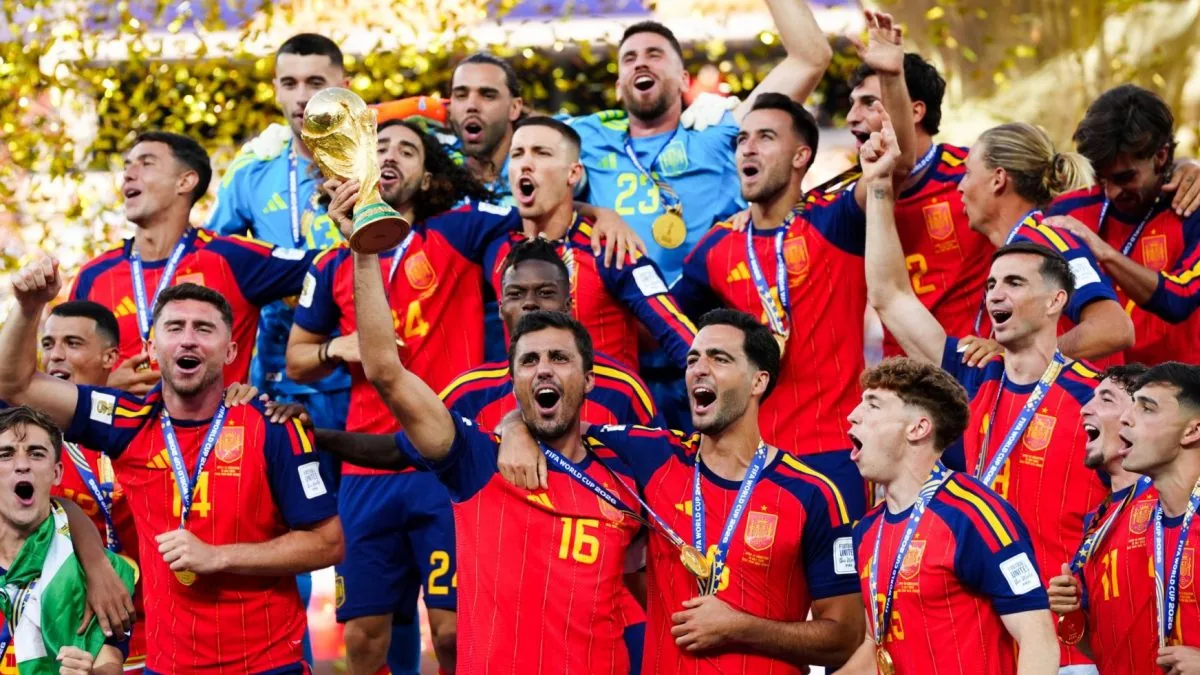

Fans in Madrid gathered in large numbers to celebrate Spain‘s victory in the World Cup final against Argentina. Despite a heatwave and the prospect of an early start to the work week, many chose to watch the match in public spaces across the city and the wider region.
The temperature in Madrid reached 32C as people filled bars, parks, fairgrounds, and bullrings. Many decorated the streets with red-and-yellow flags, showing their support for La Roja. In the capital, a significant number of supporters converged on the Plaza de Colón to view the game under the statue of Christopher Columbus. The plaza, a frequent venue for tournament screenings, was overlooked by the largest flag in Spain, measuring 21m by 14m and weighing 35kg.
The match was described as a dream final by some, highlighting the shared history between Spain and Argentina. The Argentinian ambassador in Madrid had previously spoken about the two countries’ commonalities, urging pride and composure from both sides. For Spain, the final presented an opportunity for another historic victory, following their first World Cup triumph 16 years prior. Argentina, having last lifted the trophy in 2022, aimed for a fourth title.
Match Atmosphere and Key Moments
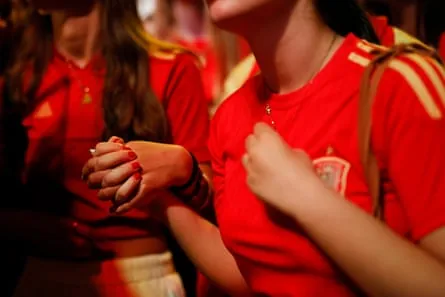
The atmosphere in Madrid was one of anticipation, with hopeful cries of “a por la segunda!” (Let’s get a second title!) echoing through the crowds. Some fans expressed a neutral stance on the outcome, with one Chilean supporter noting that he would be happy regardless of whether Spain or Argentina won, as long as the cup remained in South America if Argentina were victorious. Others, like Katy, an 18-year-old Madrileña, described the moment as historic and exciting, having been two years old during Spain’s last World Cup win.
Miguel Hinojal Vicente, 37, travelled from Toledo to Madrid, drawn by the celebratory atmosphere as much as the match itself. He recalled Spain’s previous World Cup success as a “magical thing.” His friend, Raquel García, emphasised the unifying power of such events, stating that they bring people together and foster happiness.
The game itself was characterised by a slow pace and lingering heat, which contributed to a restless atmosphere among the spectators. This changed at 11:26 pm when Nico Williams scored, only for the goal to be disallowed. The initial roars of celebration gave way to disappointment, with some fans momentarily losing focus.
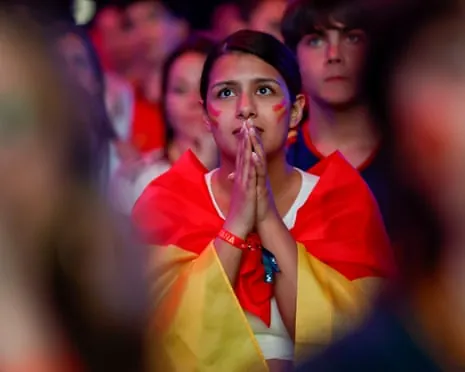
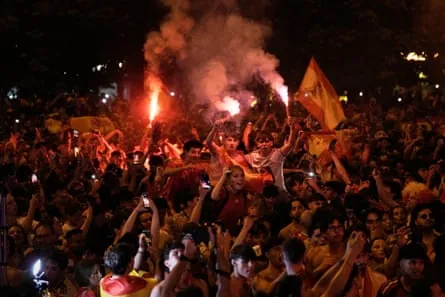
However, the crowd was re-energised 17 minutes later when Ferran Torres scored, eliciting a thunderous reaction. Screams, smiles, and flares erupted, transforming the mood. Despite another potential disallowed goal for Spain, La Roja’s momentum became undeniable. The final whistle, which sounded after midnight, was met with widespread delight in the Plaza de Colón, with tears and embraces shared among fans, police, and ambulance workers.
Spain’s Victory and Playing Style
The match, which concluded with a 1-0 scoreline in extra time, saw Ferran Torres score in the 106th minute. The final was held at MetLife Stadium. Spain’s victory marks a continuation of their footballing success, having previously been champions of Europe and the world. The team’s style, often associated with a possession-based approach, has evolved from the era of players like Xavi, Iniesta, and Busquets.
The current success is attributed to the coaching system, with Luis de la Fuente having managed various Spain youth teams for eight years before the senior team’s recent achievements. The final was described as difficult to watch due to Argentina’s defensive strategy. Argentina received more red cards than shots during the 98 minutes of normal time, focusing on disrupting the game rather than expansive play.
Spain’s victory is seen by some as a triumph for their system over individual brilliance, and for a nation that has achieved significant success in football over two decades. Spain holds titles as European champions and world champions in men’s football.
The match highlighted a clash of styles, with Spain’s aesthetic approach contrasting with Argentina’s more physical and disruptive tactics. Argentina’s strategy involved holding out and hoping for moments of brilliance, often leading to a focus on spoiling the opponent’s play. The final saw both teams push their respective approaches to extremes, with Spain introducing players like Pedri and Ferran Torres to reinforce their positional dominance.
Argentina’s tactics, which included frequent fouls and protests against referee decisions, were noted throughout the tournament. Enzo Fernandez eventually faced consequences for his actions. Despite the challenging nature of the opposition’s play, Spain’s victory was celebrated as a win for good sport, marking an extraordinary triumph for their established system.
Read Also
Source: theguardian.com

Daniel Fairbrother is the Senior Football Correspondent at Latest News UK, covering the Premier League, the EFL and the England national side with over a decade of reporting experience. He spent eight years on the football desk of a Yorkshire daily before moving into national coverage. He holds a degree in Sports Journalism from the University of Sunderland and completed an NCTJ diploma. Based in Leeds, he watches non-league football and runs a five-a-side league. “The best football stories are won in the week, not on the whistle.”