
Australia’s Dominance in the Pool
Australia has established a strong presence at the Commonwealth Games in Glasgow, particularly at the Tollcross Swimming Centre. On the second day of competition, Australian swimmers secured five gold medals, contributing to a total of 11 gold medals after an initial haul of six on the opening day. This performance has extended their lead at the top of the medal table.
Among the notable victories, Sam Williamson, Sam Short, and Mollie O’Callaghan each claimed gold. Other individual successes included Alex Perkins winning her first major individual title, and Kyle Chalmers adding another gold in a relay event.
Williamson’s Comeback Victory
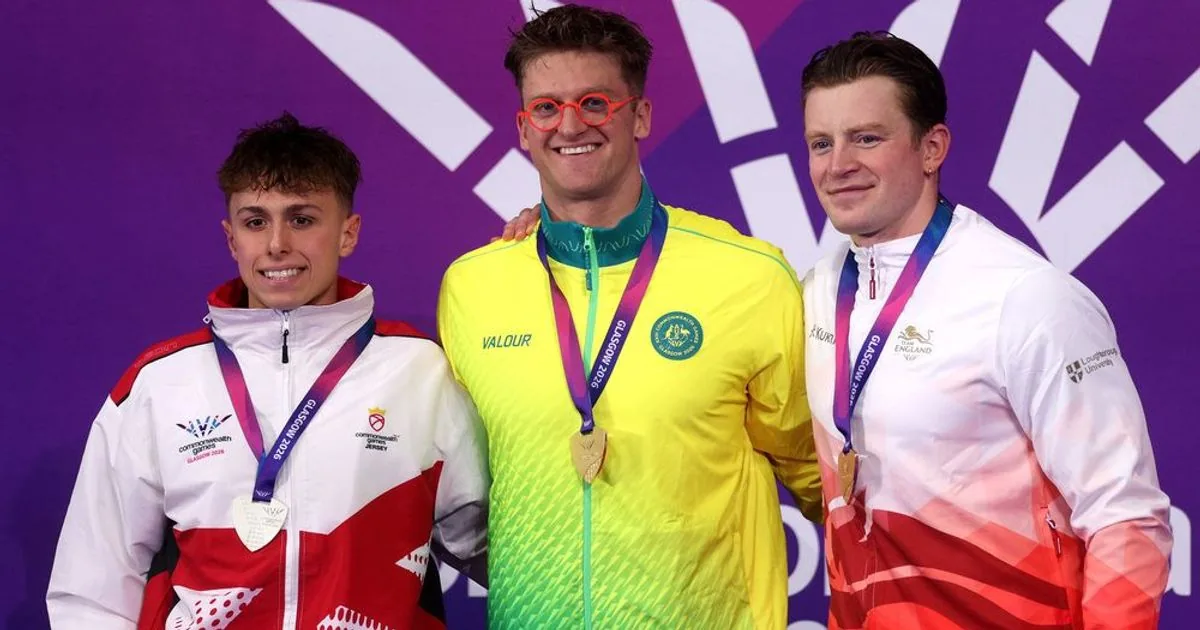
Sam Williamson delivered a significant performance in the men’s 100m breaststroke final, defeating Adam Ramsay-Peaty. Williamson, a 28-year-old Victorian, completed the race in 59.17 seconds. His victory followed a challenging period, as he had ruptured his patella tendon in April 2025, an injury that kept him out of the sport for 13 months.
Williamson described the mental challenge as the toughest he had faced, stating that he considered giving up daily. However, support from his team and a surgeon who committed to helping him return to competition motivated him. Filip Nowacki of Jersey secured silver, marking his nation’s first Commonwealth Games medal since 1990, while Adam Ramsay-Peaty, a two-time Olympic champion, finished third.
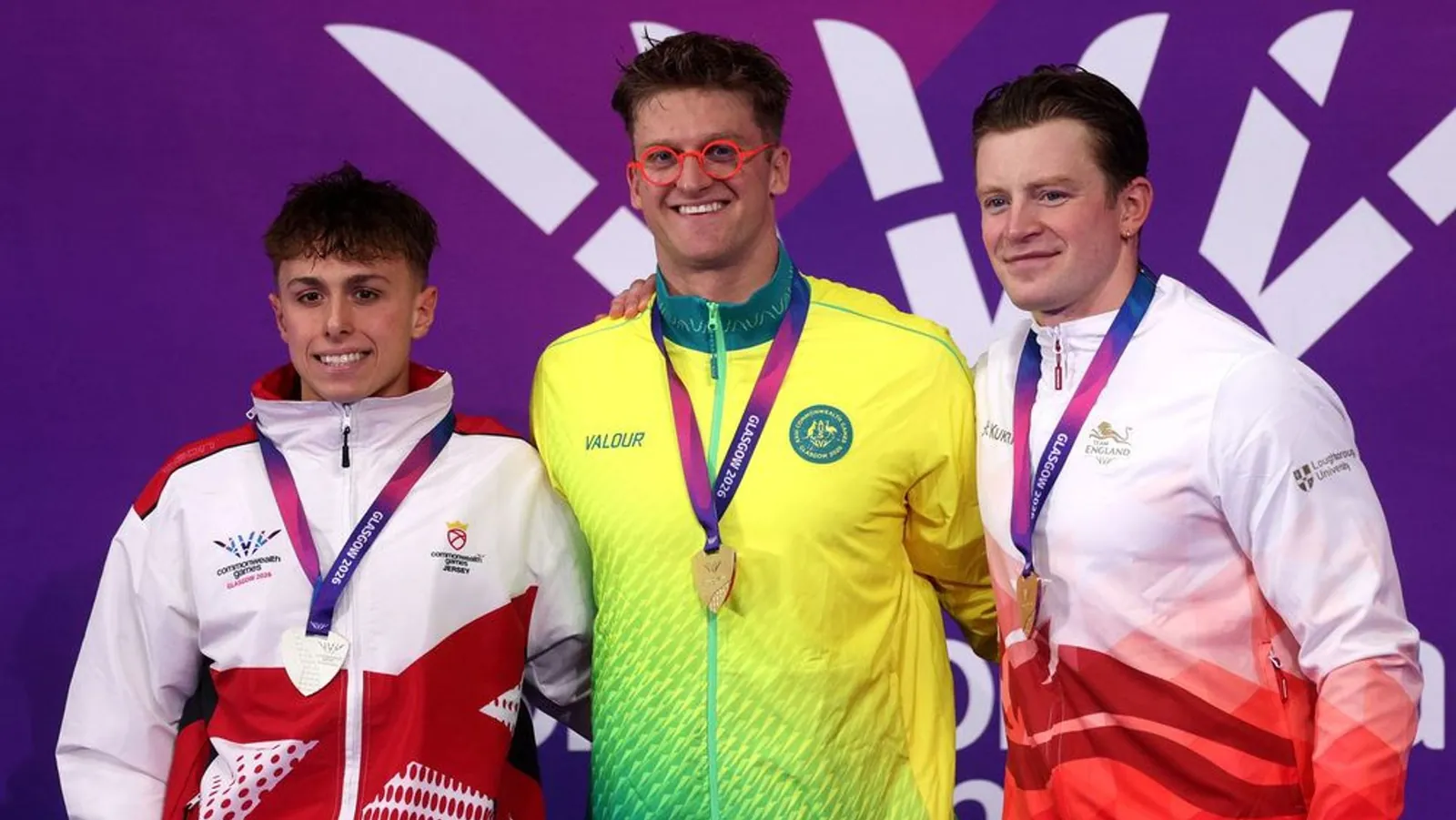
Williamson had previously won a bronze medal at Birmingham 2022. His win in Glasgow was particularly emotional, as he expressed gratitude to his family after the race.
Freestyle Successes and Records
In the men’s 400m freestyle, Sam Short dominated the event, finishing in 3 minutes 41.25 seconds, more than four seconds ahead of his closest competitor. This led to an all-Australian podium, with Elijah Winnington securing silver and Ben Goedemans taking bronze. Winnington narrowly edged out Goedemans by one hundredth of a second, despite having experienced food poisoning the night before the race.
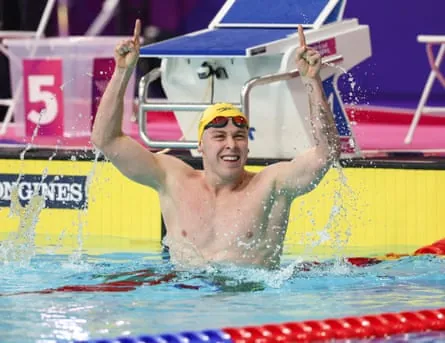
Short’s victory contributed to his goal of winning five gold medals in Glasgow. Winnington noted that the Australian sweep in the 400m freestyle echoed a similar achievement at Birmingham four years ago, highlighting the country’s strong history in the event.
Mollie O’Callaghan claimed her second gold medal by winning the women’s 200m freestyle in 1 minute 54.66 seconds. She had previously anchored the women’s 4x100m freestyle winning quartet the night before. O’Callaghan’s participation had been uncertain due to spinal stress fractures and bone bruising in her back. She adapted her training to manage the injury, demonstrating resilience in her performance.
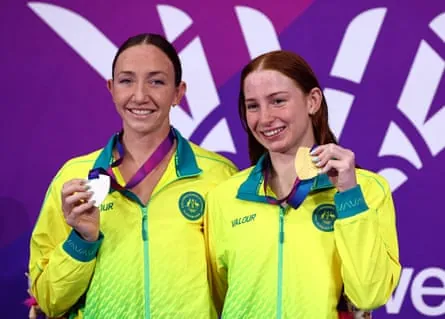
Her teammate, Lani Pallister, secured silver in the 200m freestyle with a time of 1 minute 55.01 seconds, contributing to an Australian one-two finish. Erika Fairweather of New Zealand earned bronze, overtaking Freya Colbert of England in the final stretch.
Alex Perkins, two days before her 26th birthday, won the 50m butterfly in 25.37 seconds. This marked her first major individual crown, having previously won four major individual medals without reaching the top of the podium. Perkins expressed surprise at achieving this level of success.
The Australian freestylers continued their strong showing with a fifth gold medal in the mixed relay. The team, comprising Flynn Southam, Kyle Chalmers, Shayna Jack, and Meg Harris, set a new Games record with a time of 3 minutes 19.36 seconds. This victory brought Kyle Chalmers‘ career total to nine Commonwealth Games gold medals. He is now aiming to surpass Ian Thorpe as the most successful Australian male swimmer in Games history if he secures another gold in the 100m freestyle.
In the para events, Jack Ireland, a Paralympic silver medallist, earned another second-place finish for Australia in the 200m freestyle S14 final, contributing to the nation’s sixth medal in the pool’s para events.
Source: theguardian.com

Leo Ashworth is a Sports News Writer at Latest News UK. He cut his teeth on regional sport before specialising in fast breaking-news writing. He focuses on rugby union, golf and boxing and is known for clear, deadline-driven reporting. He holds a degree in Journalism from the University of Central Lancashire and completed an NCTJ diploma. Now based in Newcastle, he follows the European Tour and boxes at an amateur gym. “Get it right first, then tell readers why it matters.”