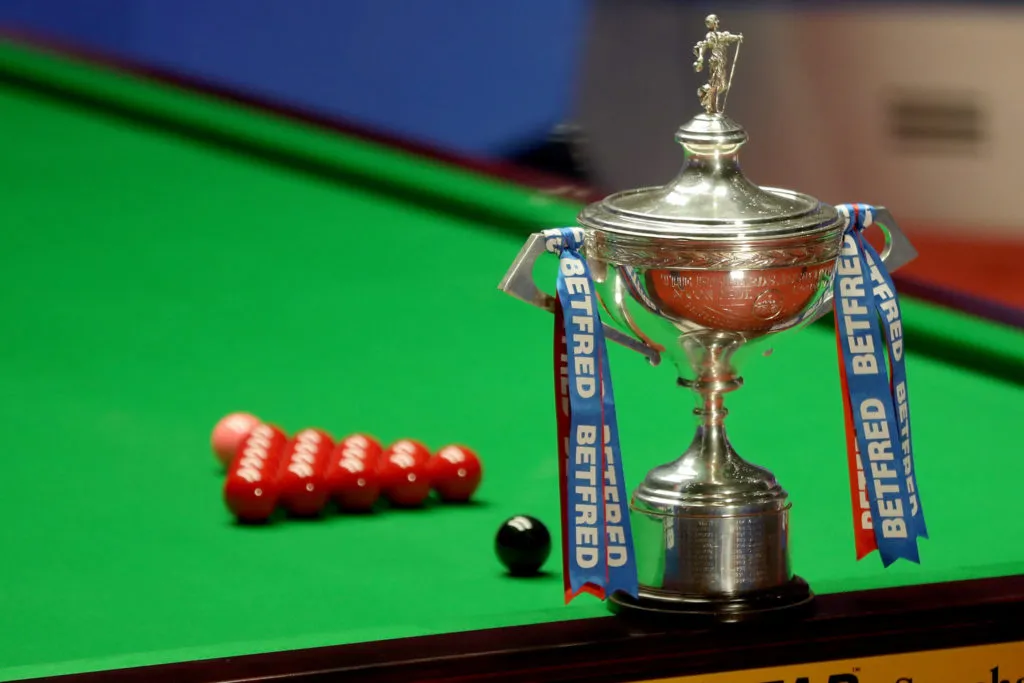

A protest by Sasha Swan, an OnlyFans model, disrupted the World Snooker Championship final on May 3, 2026, at the Crucible Theatre in Sheffield. This incident not only halted the match but also highlighted ongoing tensions surrounding the BBC’s licence fee.
During a crucial moment in the final match between Shaun Murphy and Wu Yize, a spectator jumped over a barrier and shouted, “who f—ing pays their TV licence anyway?” The protest led to immediate repercussions; officials ejected Swan from the venue. The match had been broadcast live on BBC One, making the protest even more significant.
This wasn’t an isolated incident. Just days before, another spectator faced ejection during the semi-final for shouting about “the Epstein files.” Such disruptions have become increasingly common at this year’s World Snooker Championships, raising questions about audience behavior and its implications for sporting events.
In fact, Wu Yize had built a solid lead of 10-7 after two sessions when the protest occurred—an unexpected interruption that could have affected player focus and momentum. John Parrott, commenting on the disturbance, reassured viewers that “it’s all sorted,” but one has to wonder if such protests will become a regular feature of major sporting events.
Key facts:
- The protest occurred during a high-stakes match in front of a packed audience.
- Sasha Swan is known for her presence on OnlyFans, adding another layer to her motives.
- This incident follows previous disruptions at snooker events, including protests against climate change.
The BBC’s funding model has come under scrutiny lately. With debates intensifying over whether public funding for broadcasting is still viable or fair, incidents like this only serve to fuel discussions. Some might argue that Swan’s actions were misguided; others might see them as a necessary wake-up call.
As we reflect on this event, it’s clear that tensions around media funding are palpable. With no clear resolution in sight regarding public broadcasting fees and their relevance today, one must ask: how will these protests shape future interactions between sports and societal issues?

Daniel Fairbrother is the Senior Football Correspondent at Latest News UK, covering the Premier League, the EFL and the England national side with over a decade of reporting experience. He spent eight years on the football desk of a Yorkshire daily before moving into national coverage. He holds a degree in Sports Journalism from the University of Sunderland and completed an NCTJ diploma. Based in Leeds, he watches non-league football and runs a five-a-side league. “The best football stories are won in the week, not on the whistle.”