
The RAF personnel’s participation in Anzac Day ceremonies this year serves as a poignant reminder of the sacrifices made by military members, while simultaneously highlighting their active role in contemporary conflicts.
On April 25, RAF Leeming personnel honored fallen servicemen in Harrogate, commemorating the contributions of 97 Royal Australian Air Force and 23 Royal New Zealand Air Force members. This solemn event reflects a deep-rooted tradition of remembrance.
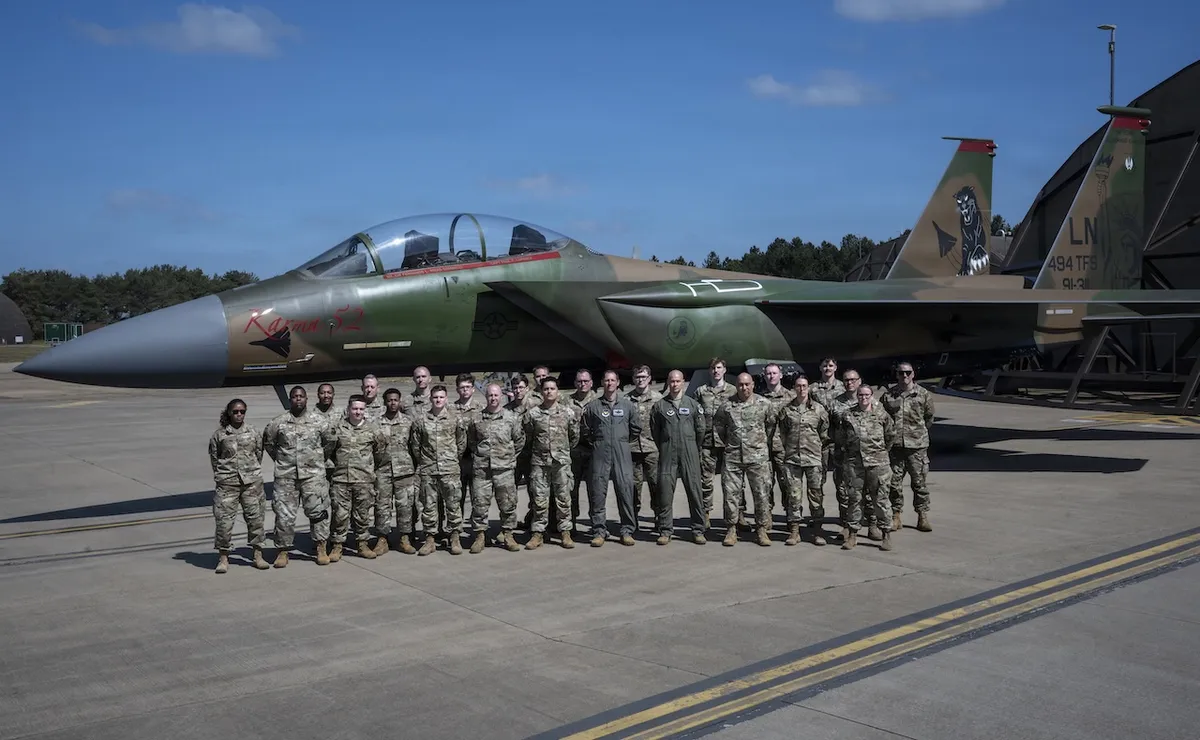
Meanwhile, at RAF Lakenheath, an F-15E Strike Eagle was painted to celebrate the 40th anniversary of Operation El Dorado Canyon, which was a significant military response to the bombing of the La Belle discotheque in West Berlin. Such gestures connect past military actions with current operations.
The juxtaposition is striking. While honoring history, RAF forces are actively engaged in modern conflicts, particularly in the Middle East. Reports indicate that RAF troops intercepted more than 100 Iranian drones and missiles at a coalition base during a recent conflict.
Key statistics:
Over 100 drones intercepted by RAF forces during six weeks of conflict. and The coalition base faced daily attacks from as many as 28 drones and missiles linked to Iran.
This ongoing engagement raises questions about the evolving nature of warfare. The Ministry of Defence is currently discussing expanding the UK’s counter-drone capabilities — a necessary adaptation to new threats.
Air Chief Marshal Harv Smyth acknowledged this reality, stating, “Yes, that’s definitely a discussion that we’re having.” His comments underscore the urgency felt within military circles regarding modern threats.
As these events unfold, it’s clear that the RAF remains deeply intertwined with both historical remembrance and active combat roles. How will this duality shape perceptions of military service moving forward?

As Latest News UK's Sports Reporter, Hannah Whitfield reports on tennis, cricket and athletics for readers across the country. She built her name covering the county circuit and Team GB at two Commonwealth Games. She holds a degree in Sport and Media from Loughborough University and completed an NCTJ diploma. Hannah lives in Bristol, where she plays club tennis and coaches a junior side. “Sport is at its best when you let the athletes tell the story.”