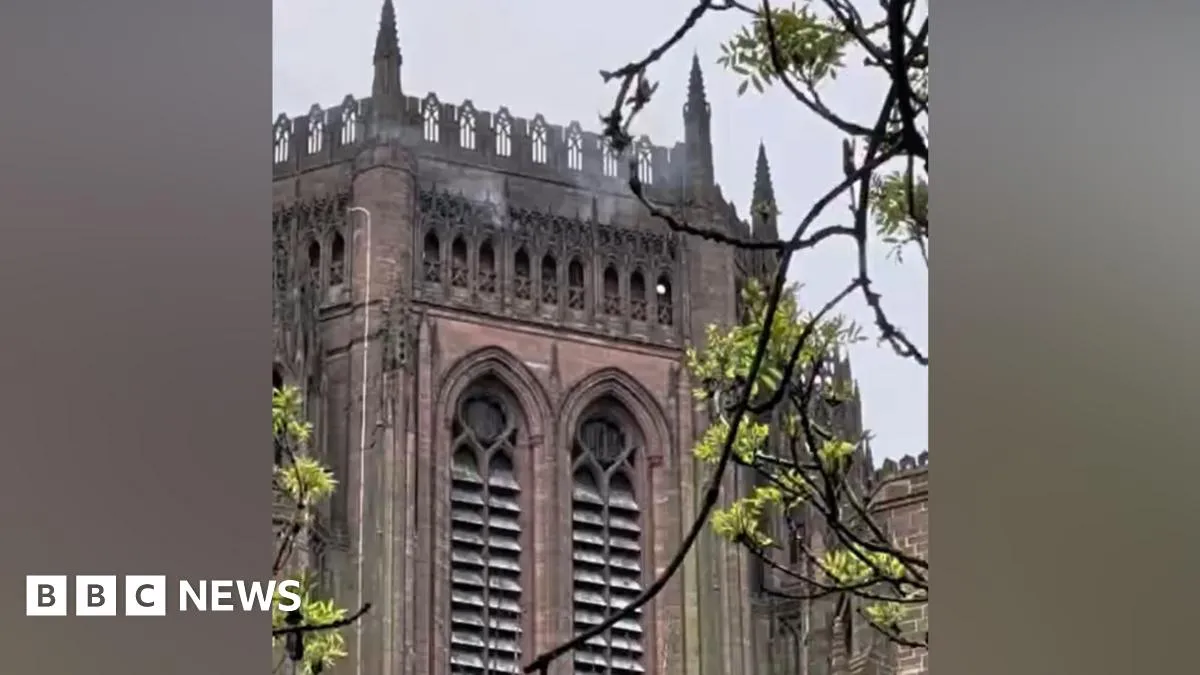

On a seemingly ordinary day, firefighters battled a blaze at the top of Liverpool Anglican Cathedral, leading to evacuations and urgent warnings for residents and tourists to steer clear. The incident unfolded around 2:44 PM, when crews from Merseyside Fire and Rescue Service were alerted to the scene.
The fire was extinguished by 15:12 BST, but the damage had already sparked widespread concern. As the largest cathedral in Britain and the fifth largest in the world, Liverpool Cathedral is not just an architectural marvel; it’s a significant tourist attraction. The implications of this event reach far beyond the flames.
What changed? The decisive moment came when firefighters arrived on scene just five minutes after being alerted. They quickly assessed the situation, working diligently to ensure public safety while minimizing damage to this historic structure. Fortunately, no injuries were reported, but the cause—a determined electrical fault—has raised alarms regarding fire safety measures in such iconic buildings.
Emergency response teams acted swiftly, but one can’t help but wonder how prepared we truly are for emergencies in our architectural landmarks. Experts argue that while emergency protocols are essential, ongoing training and awareness about fire risks must be prioritized.
Key timelines during the incident:
- 2:44 PM – Fire crews were alerted to the incident.
- 2:49 PM – Fire crews arrived on scene.
- 3:12 PM – The fire was extinguished.
- 3:22 PM – The main body of the fire was under control.
A spokesman for Liverpool Cathedral acknowledged the incident, stating, “We are aware of the recent fire at our site and apologise for any concern or disruption this incident may have caused.” This reflects a broader issue—how do we balance tourism with public safety?
The cathedral serves as a vital space for worship and reflection, attracting visitors daily. However, incidents like this can deter tourists and impact local businesses reliant on foot traffic. Public safety must come first—yet how do we ensure that our historical sites remain accessible?
As we reflect on this event, one question lingers: What steps will be taken to enhance fire safety measures in our beloved landmarks? The next few weeks may reveal critical insights into how we safeguard these treasures while keeping them open to all.

Leo Ashworth is a Sports News Writer at Latest News UK. He cut his teeth on regional sport before specialising in fast breaking-news writing. He focuses on rugby union, golf and boxing and is known for clear, deadline-driven reporting. He holds a degree in Journalism from the University of Central Lancashire and completed an NCTJ diploma. Now based in Newcastle, he follows the European Tour and boxes at an amateur gym. “Get it right first, then tell readers why it matters.”