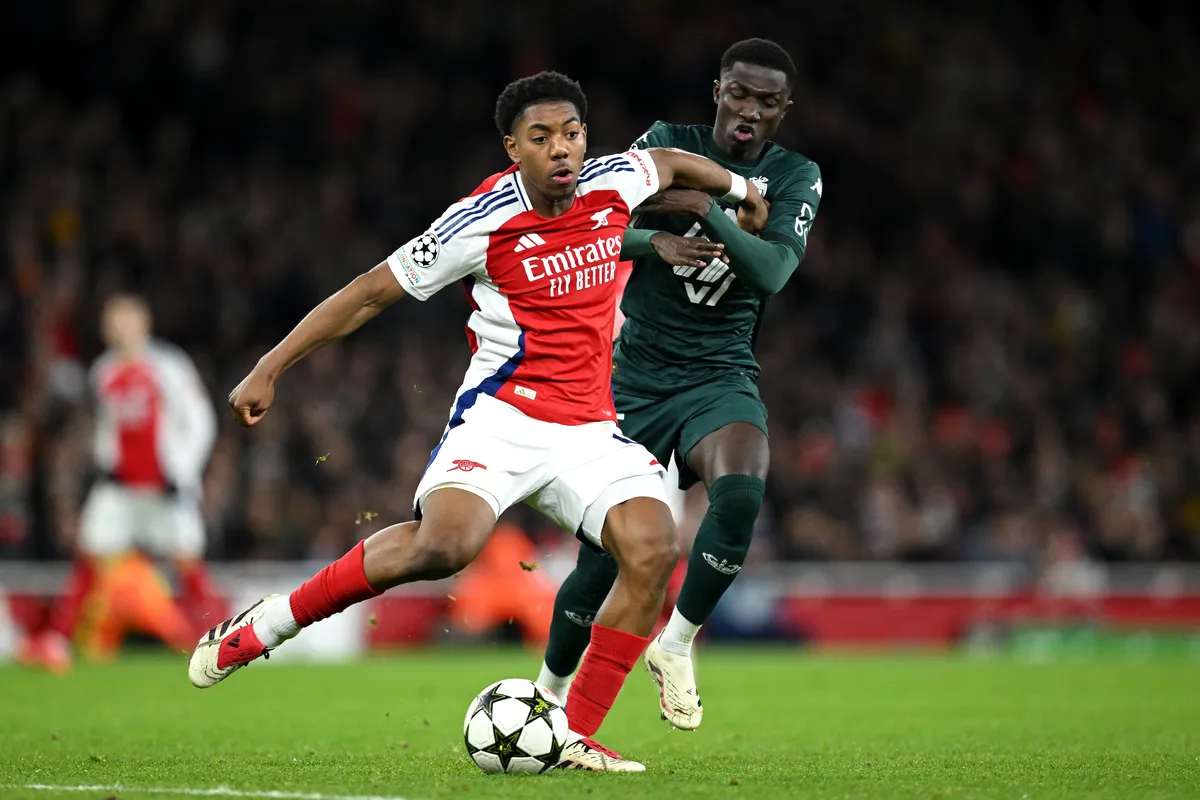

Mikel Arteta’s bold decision to start 19-year-old Myles Lewis-Skelly in a crucial Champions League semi-final against Atletico Madrid reflects a shift towards youth in high-pressure situations. This match, held at the Emirates Stadium on May 5, 2026, was pivotal for Arsenal, who last reached the Champions League final in 2006. The stakes were high, and many wondered if Arteta was taking an unnecessary risk.
Lewis-Skelly had shown promise before, making his first senior start in midfield against Fulham just days prior. Thierry Henry praised his performance as “outstanding,” which likely influenced Arteta’s decision to keep him in the starting lineup. The young midfielder completed an impressive 39 of his 41 passes against Atletico Madrid in the first half alone, showcasing his ability to handle pressure.
Arteta’s tactics have often leaned towards experience, particularly in crucial matches. However, this gamble on youth—especially with such significant stakes—could reshape perceptions of his management style. Observers noted that Lewis-Skelly’s strengths include ball progression and a keen sense for carrying the ball into the final third, traits that could be essential against a team like Atletico Madrid known for their strategic resilience.
Fans reacted positively to Lewis-Skelly’s passing during the match, suggesting that his freshness—having not been burdened with heavy minutes this season—allowed him to perform at a high level when it mattered most. Yet, some critics questioned whether such reliance on young talent could backfire under immense pressure.
Arteta’s decision will reveal more about his appetite for risk than about either player’s quality. As the match progressed with a score of 1-1 after the first leg against Atletico Madrid, it became clear that every decision would be scrutinized. The role of established players like Declan Rice also came into play, as fans speculated on how much support he could provide to a young player navigating such a tense environment.
The implications of this match extend beyond just one game; they signal a potential long-term strategy shift within Arsenal’s midfield dynamics. If Lewis-Skelly continues to thrive under pressure, he may solidify his place as a key figure moving forward. After all, as Henry stated, “Myles Lewis-Skelly’s long-term future is in midfield.” This might be just the beginning of a new era for Arsenal.
As observers look ahead, one question looms large: will Arteta continue to trust youth in these pivotal moments, or will he revert back to experience when the stakes are highest?

Daniel Fairbrother is the Senior Football Correspondent at Latest News UK, covering the Premier League, the EFL and the England national side with over a decade of reporting experience. He spent eight years on the football desk of a Yorkshire daily before moving into national coverage. He holds a degree in Sports Journalism from the University of Sunderland and completed an NCTJ diploma. Based in Leeds, he watches non-league football and runs a five-a-side league. “The best football stories are won in the week, not on the whistle.”