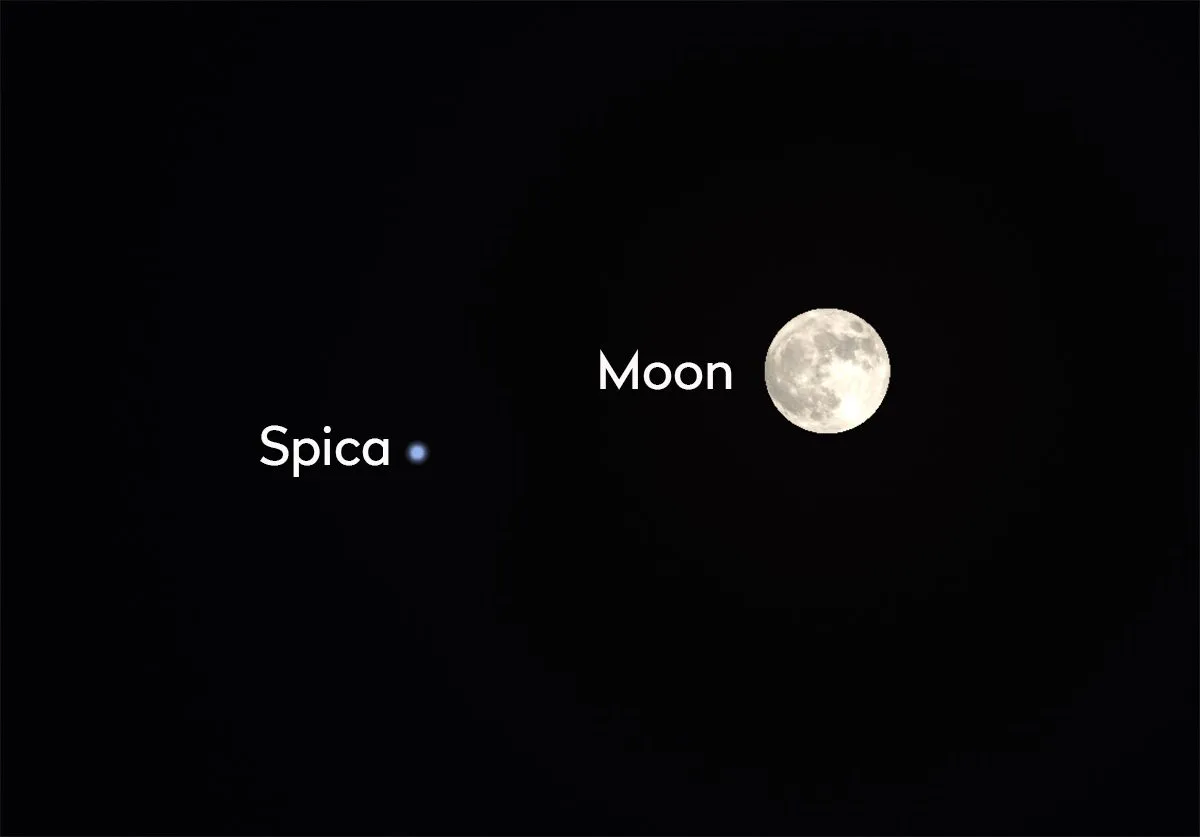

The upcoming Flower Moon on May 1, 2026, will be visible in the southeast sky just after sunset. This is not your average full moon; it will also be classified as a micromoon. Why does that matter? Well, it means the moon will appear smaller than usual due to its distance from Earth.
The term “micromoon” describes a full or new moon that occurs when the moon is at its farthest point from Earth in its orbit—also known as apogee. On this particular date, the Flower Moon will set in the southwest during the early hours of dawn after rising in the southeast. It’s a celestial dance that many stargazers and astronomers look forward to.
Key facts about the Flower Moon:
- The Flower Moon rises in May and is named for the blooming flowers of spring.
- This full moon will occur just after sunset on May 1, 2026.
- Spica, one of the brightest stars visible in spring, will appear to the left of the moon on April 29, 2026.
- During this event, the moon will be approximately 252,360 miles away from Earth.
Interestingly enough, another micromoon—the full Strawberry Moon—will follow shortly after on June 29, 2026. This raises an intriguing question about how these celestial events may influence our perception of lunar phases. Are we more captivated by their beauty or their scientific significance?
As we anticipate this rare occurrence in spring, one can only wonder how many people will take time to look up at the sky and appreciate what is happening above them. The next few months are sure to be filled with discussions about astronomy and nature’s wonders.

Daniel Fairbrother is the Senior Football Correspondent at Latest News UK, covering the Premier League, the EFL and the England national side with over a decade of reporting experience. He spent eight years on the football desk of a Yorkshire daily before moving into national coverage. He holds a degree in Sports Journalism from the University of Sunderland and completed an NCTJ diploma. Based in Leeds, he watches non-league football and runs a five-a-side league. “The best football stories are won in the week, not on the whistle.”