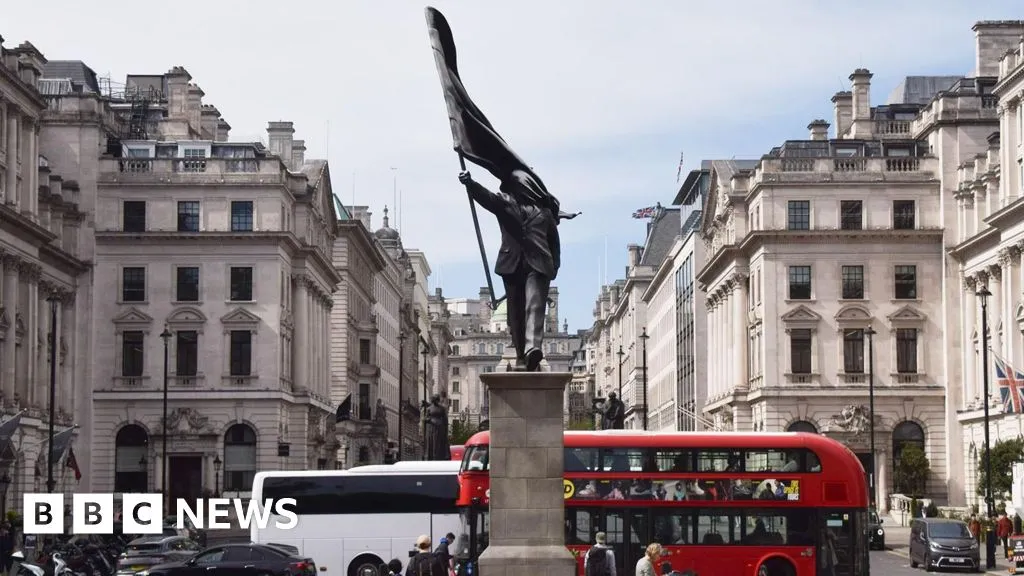

Banksy has confirmed his authorship of a new statue in central London, unveiled on April 30, 2026. The statue, located at Waterloo Place, depicts a suited man carrying a large flag that obscures his face. This revelation has ignited debate over the artwork’s meaning and significance.
Banksy’s identity has been the subject of much speculation and investigation. He tends to appear unexpectedly, as one commentator noted: “I love that he appears when enough time has passed to forget, and arrives with full force unnoticed.” This mysterious approach adds layers to his works, including this latest piece.
The statue’s plinth features Banksy’s signature etched into it, further solidifying its authenticity. Observers have noted how it reflects the bronze and granite monuments nearby—such as the Duke of York Column and a tribute to Florence Nightingale. Yet, what does it mean for a street artist to place such a piece among established monuments?
In fact, Banksy has been increasingly active in London over the last two years. His previous works include a series of stencilled animal silhouettes throughout the city in summer 2024 and an unauthorised mural at the Royal Courts of Justice in September 2025. This latest statue seems to be part of an ongoing dialogue between street art and traditional public monuments.
Reactions from art critics have varied. One long-time Banksy collector remarked, “This one really hits. Big monument energy, but the idea is brutally simple: a suited figure blinded by its own flag. Classic Banksy. Quiet at first, then impossible to unsee.” Such reflections underscore how Banksy’s work often invites deeper contemplation.
As observers ponder the implications of this statue—especially given its placement near significant government buildings and foreign embassies—questions arise about the role of art in public spaces. Will this new piece lead to further discussions about authority, identity, or even protest?

Daniel Fairbrother is the Senior Football Correspondent at Latest News UK, covering the Premier League, the EFL and the England national side with over a decade of reporting experience. He spent eight years on the football desk of a Yorkshire daily before moving into national coverage. He holds a degree in Sports Journalism from the University of Sunderland and completed an NCTJ diploma. Based in Leeds, he watches non-league football and runs a five-a-side league. “The best football stories are won in the week, not on the whistle.”