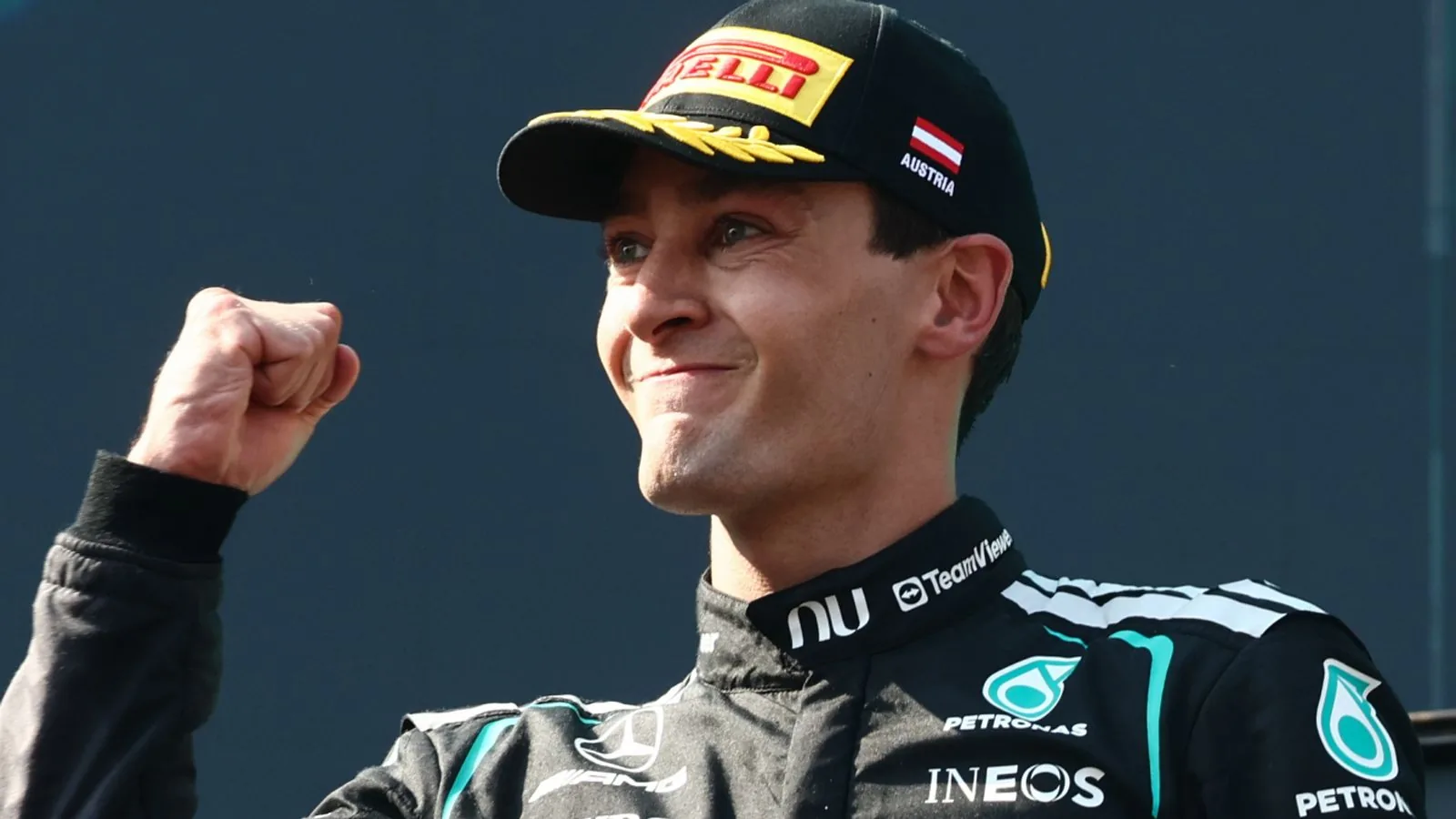

George Russell secured his second win of the season at the Austrian Grand Prix, starting from pole position. This victory moved him to second in the drivers’ standings, 40 points behind his teammate Kimi Antonelli. Despite the win, Russell’s pole position was achieved under controversial circumstances, prompting questions about the application of yellow flag rules in Formula 1.
During the final part of qualifying, Max Verstappen crashed at Turn Nine, one of the fastest corners on the track, taken at nearly 140mph. Marshals initially displayed a single yellow flag. Antonelli, misinterpreting the light board as a double yellow, slowed down significantly, adhering to the protocol for a double yellow flag which requires drivers to “slow down and be prepared to stop.”
Under a single yellow flag, drivers are not required to abandon their lap but must avoid setting a fastest time in the affected section. Russell complied with this rule, and the remainder of his lap was fast enough to secure pole position. Both Verstappen and Antonelli questioned the decision to show only a single yellow flag, especially given Verstappen’s car was in the barrier in a high-speed corner while other drivers were attempting their fastest laps.
Flagging controversy and driver reactions
Verstappen described the situation as “quite crazy,” while Antonelli stated, “There was a car in the wall in a fast corner. I don’t know why it didn’t go double-yellow straight away, because it’s a super-quick corner, and if you go off at the same time, it can end up very badly. That was a bit confusing.” Antonelli further suggested that such incidents in high-speed corners should prompt an immediate double yellow flag, differentiating them from slow-speed corners where a single yellow might suffice. Race control upgraded the flag to a double yellow within 20 seconds, but by then, all drivers had completed their laps.
The incident has led to concerns that this precedent could encourage drivers to continue pushing hard under single yellow flags, potentially compromising safety. The rules state that Russell did not break any regulations, but the appropriateness of the single yellow flag in such a dangerous situation is being debated.
Ferrari’s Austrian performance and strategy debates
Meanwhile, Ferrari experienced a challenging race in Austria, finishing fifth and eighth with Lewis Hamilton and Charles Leclerc, respectively. This outcome followed Hamilton’s victory in Barcelona. Hamilton described the Austrian Grand Prix as “a reality check” for Ferrari, noting a lack of pace and grip. Ferrari was the only top team to employ a three-stop strategy during the race.
Their qualifying positions of second and third were not considered representative, as they were achieved because Verstappen and Antonelli did not complete their final laps. Hamilton revealed disagreements with the team over strategy, preferring a three-stop approach due to high track temperatures, while the team initially pushed for a two-stop. He stated, “I was dead set it was a three for me. I thought the (tyre) deg was going to be super high.”
Team boss Frederic Vasseur suggested that Ferrari might have been overly focused on trying to keep pace with Mercedes early in the race, leading to an aggressive strategy that ultimately did not pay off. He commented, “Looking back, we were probably too focused on Mercedes. We pushed too hard in the opening laps with both cars and then perhaps reacted too aggressively with the strategy, trying to stay with them when, realistically, that wasn’t our race.” Hamilton acknowledged that the Barcelona win might have been an anomaly, and the team still has significant development work ahead, particularly in power, to close the gap to Mercedes.
Russell’s resurgence and upcoming challenges
Russell’s victory in Austria marked his first grand prix win since the opening race of the season, helping him to recover from what he described as a “low point.” He had experienced a challenging period, including a disappointing run of form after winning in Melbourne. His teammate Antonelli had extended his championship lead to 68 points after a record-extending victory in Monaco, where he became the first driver to secure the first five wins of his career in succession.
Russell’s recent performances, including a second place in Barcelona and his win in Austria, have helped him regain momentum. He reflected on the difficulties, stating, “It’s been a tough couple of months with some really tricky races, with races that felt like everything was going against me, then some races with some tough performances.”
Despite reducing Antonelli’s championship lead, Russell remains cautious about the upcoming British Grand Prix at Silverstone. He expressed uncertainty about consistently matching Antonelli’s pace, noting fluctuations in performance even within the Austrian weekend. He aims to work closely with his team to understand how to consistently achieve the strong performances seen during his pole laps. The next event in the 2026 Formula 1 season is a Sprint weekend at Silverstone for the British Grand Prix.
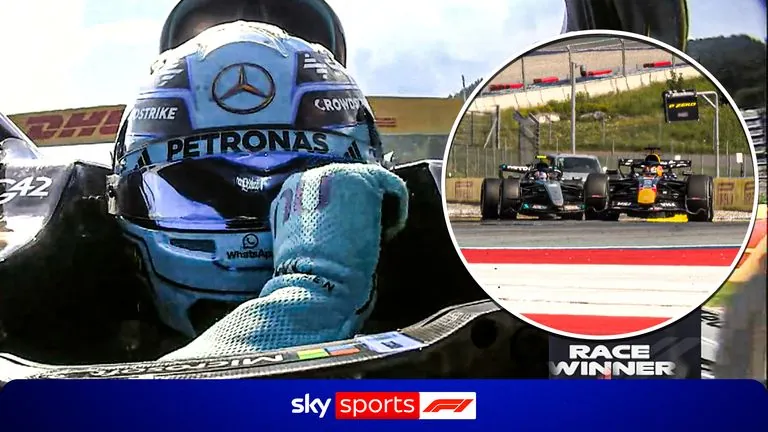
Driver market speculation and Williams’ struggles
The driver market, often referred to as the ‘silly season,’ is currently active with speculation for 2027. The future of Max Verstappen is seen as a key factor in determining the extent of driver movement among top teams. Verstappen is contracted with Red Bull until the end of 2028, but his deal includes a performance clause that could theoretically allow him to leave if not satisfied. However, many top team drivers, including those at Ferrari and McLaren, are under contract beyond the current season. Russell has affirmed his commitment to Mercedes, where Antonelli’s future is also secure.
The future of Fernando Alonso is also a topic of discussion, as he considers whether to remain in F1. Aston Martin, his current team, is not considered a particularly enticing option in the current season, despite the presence of Adrian Newey.
Meanwhile, Williams is facing a regression in competitiveness. Despite finishing fifth last year, a result that surprised the team given their focus on the 2026 season, they have slumped this year. Team principal James Vowles had stated that 2026 was intended to be a year for significant progress towards winning races again. Currently, Williams is eighth in the constructors’ championship, with their position largely attributed to Audi’s performance.
Read Also
- New Zealand secures series victory over England in Ben Stokes' final match
- Germany faces Paraguay in World Cup last 32 after 12-year knockout absence
- Ben Stokes retires from international cricket, leaving England with leadership questions
- Boston: Germany prepare for Paraguay challenge in World Cup round of 32
Source: bbc.co.uk

Daniel Fairbrother is the Senior Football Correspondent at Latest News UK, covering the Premier League, the EFL and the England national side with over a decade of reporting experience. He spent eight years on the football desk of a Yorkshire daily before moving into national coverage. He holds a degree in Sports Journalism from the University of Sunderland and completed an NCTJ diploma. Based in Leeds, he watches non-league football and runs a five-a-side league. “The best football stories are won in the week, not on the whistle.”